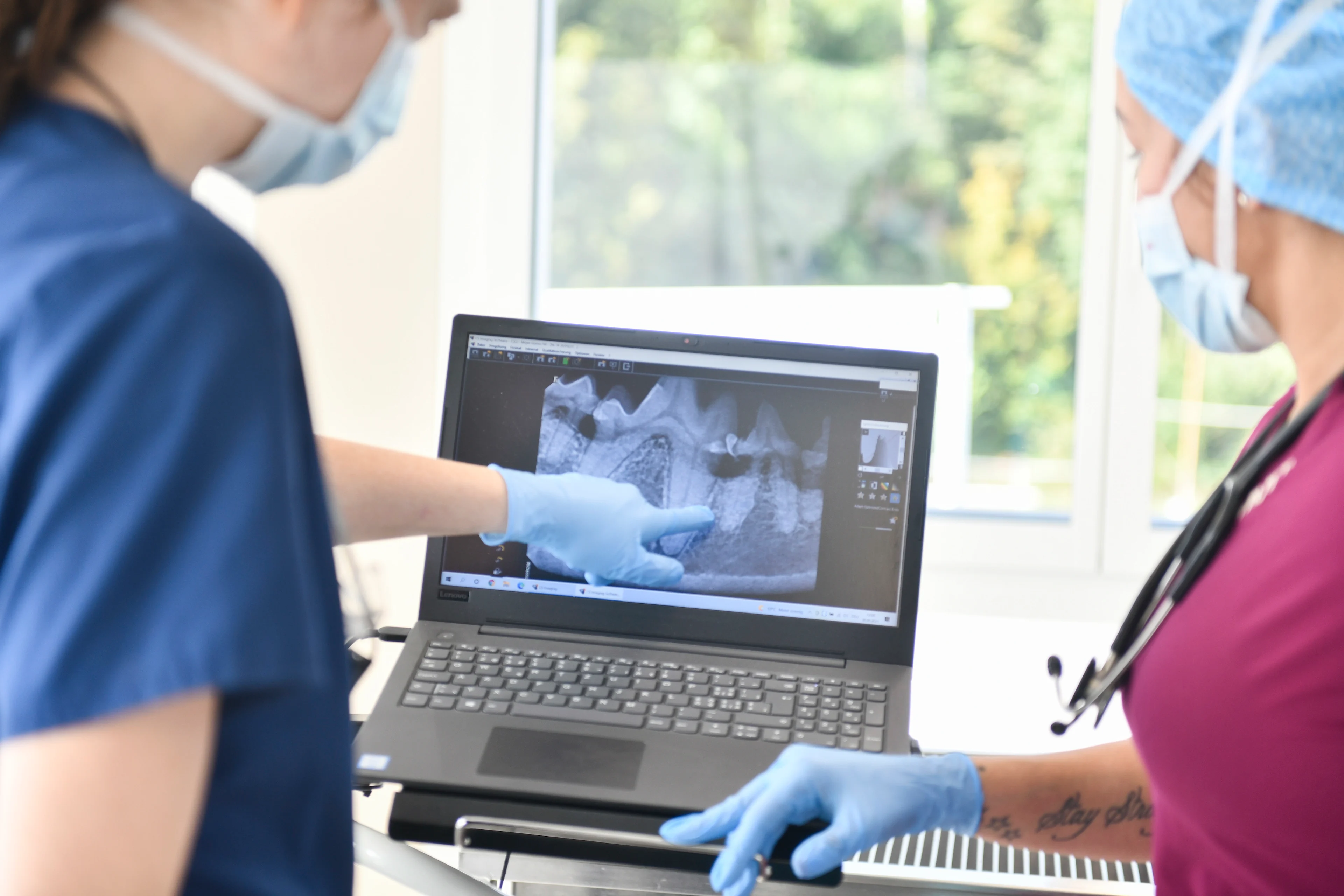
Why do we need targeted oral examinations?
Animals generally do not show pain like we do. Especially prey species (rabbits, rodents) instinctively never display pain. This means pet owners and veterinarians must proactively search for disease and dysfunction to prevent unseen suffering.
Maintaining good dental health is vital for overall well-being. Oral diseases can, as in humans, have systemic effects and cause acute or chronic pain locally.
Regular home dental care, knowledge of species-specific needs, and veterinary check-ups are essential. General practitioners must collaborate with dental specialists or exotic vets to determine the best path for each individual animal.
Prevention
Routine measures to prevent dental disease before it occurs.
Dogs and cats: daily brushing with appropriate toothpaste, dental-friendly chews, tooth-healthy diets (no soft sugary human food).
Hard chews can crack teeth without visible pain – natural bones or horn are a no-go!
A professional dental cleaning by vets is recommended annually (modern anesthesia is very safe).
“Non-anesthetic cleanings” on awake animals are ineffective and dangerous – only under anesthetic with intubation by vets!
For rabbits and rodents: daily chew toys and high-fiber diets (e.g., hay) are vital since their teeth grow continuously.
Regular check-ups prevent overgrowth or misalignment.
Signs of Dental Disease
Dogs & Cats
Halitosis (bad breath)
Excessive drooling
Difficulty eating, pawing at mouth
Red or bleeding gums, visible tartar
Preference for soft food, facial swelling
Behavioural changes
Rodents & Rabbits
Overgrown front or cheek teeth
Reduced appetite, weight loss, drooling
Facial swelling, altered eating habits
When to See the Vet
Immediate veterinary attention for:
Broken puppy teeth (anesthesia & extraction needed)
Acute trauma to teeth or soft tissues
Jaw fractures, falls or accidents (e.g. in cats)
Routine care:
Dogs & Cats: yearly dental exams, more often for small or brachycephalic breeds
Rodents & Rabbits: dental check every six months or immediately if dental issues arise
Veterinary Dental Procedures
Routine dental cleaning and polishing
Advanced disease may require extraction or surgical intervention
Rodents & rabbits often need trimming of overgrown teeth or correction of misalignment under anesthesia/sedation
Why Proactivity Matters
Veterinary dentistry thrives on proactive care and regular monitoring.
We’d rather preserve teeth than perform surgery.
Through education, early detection, and timely intervention, pet owners can help ensure their animals live healthy, pain-free lives.